Wednesday, July 6, 2011

Asymmetrical Cables--Making Progress

I'm making good progress on Cookie A's Asymmetrical Cables in Sock Knitting Master Class


I have made a few changes and came up with a few tips so far that might help you if you decide to knit these socks for yourself (and I heartily encourage you to do so).
  • The finished sizes are for 8" or 9" foot circumference but my foot measures 8 1/2". So, I added 4 stitches (the gauge is 8 sts/inch) and cast on 68 sts instead of 64. This adds a full repeat of the k2, p2 rib and the extra sts will be worked in stockinette so they won't interfere with the cable pattern. I worked the Inc rnd at the beginning of the cable pattern as: k1, p6, k1fbf, p6, k38 (instead of 34), p6, k1fbf, k1, p6, k1 to end up with 72 sts for the leg.
  • I used the Old Norwegian cast-on to ensure a stretchy edge. 
  • To make the upper leg a little bigger to accommodate my calf muscle (well, there's not much muscle, but there is a bulge), I cast on and knitted with needles one size larger than needed to get the specified gauge. For this yarn, I got the correct gauge with size 2 (2.75 mm) needles so I started with size 3 needles for the top half of the leg. The photo above shows where I'll change to the "real" needles. 
  • At first I didn't notice the difference between the Left Cable Panel and the Right Cable Panel. They are the same except for the direction of the cable twist on the first row, so as long as you get the first row right (which I didn't the first time), you can read your knitting to know which way to turn subsequent cables.
  • Another thing I noticed after a few rounds is that garter st is worked inside the cable medallions. If you remember that these center sts are knitted on the rounds that involve cable turns, it will be easy to remember when to knit and when to purl them. 
  • I rarely use a row counter. I kept track of the number of rows worked even in the center of the medallions by counting the purl ridges. There will be 4 garter ridges between Rnd 5 and Rnd 13 of the cable panels.


Friday, July 1, 2011

Socks--A Personal Challenge

As I worked on Sock Knitting Master Class, I found that I wanted to knit every pair of socks. Not only are they all good designs, but each one has at least one lesson in technique or design application. I am certain that anyone who knits all of the socks in the book will end up a veritable master (hence, the words "Master Class" in the title). And who better to give it a go than myself? So, I've decided that I will work my way through the book, knitting each pair of socks (well, maybe with a few exceptions or modifications to suit myself) and hopefully using up some of my stash yarn in the process.
I'll write posts about my experiences as I go so you'll get even more insights into these fabulous designs.

First off is Cookie A's Asymmetrical Cables (page 48), which are shown in Pagewood Farm St Elias (80% Bluefaced Leicester, 20% nylon) knitted at a gauge of 8 stitches/inch in stockinette, worked in rounds..

In her note on yarns (page 53), Clara Parkes says these socks are best knitted with "a yarn that has three or more plies to render the raised cable pattern." She also suggests keeping to a "solid or flickering semi-solid that won't distract from the flow of the cables."

The yarn in my stash that best fits these criteria is Spirit Trails Frija (80% superwash merino, 10% cashmere, 10% nylon; 377 yd/4 oz) in a beautiful combination of blues and teals. I'm certain that I'll appreciate that 10% of cashmere! To begin, as I always begin, I knitted a gauge swatch. 


I get the correct gauge on my Signature size 2 (2.75 mm) needles. I decided to use double-pointed needles because the extra-sharp points on the Signature needles will make easy work of the traveling cable pattern. Tonight I'll cast on for real and start my first sock of this "master" journey. I can't wait!

Sunday, June 26, 2011

Saturday at the Farm

Yesterday some friends and I took advantage of an open barn at Stargrazer Ranch Alpacas in nearby Loveland, Colorado to meet their Suri and Huacaya alpacas. We were allowed to go into the field with the animals, which had been sheared a few weeks ago.


Once I got over my shyness, I got close to the alpacas.


Alpacas give birth year round. Here's a beautiful 3-week old Suri. What a gorgeous chestnut color!


My friend Sarah bought a skein of yarn from this handsome dude (I forgot his name, but I'm sure Sarah hasn't). As far as I know, Sarah hasn't decided what to do with the yarn but she couldn't resist it's softness and deep brown color (notice how it matches her hair).


Not to be outdone by Sarah, I bought a bit of roving to spin. Here's 13 ounces of  fleece from Cutie Pie (who has since left the farm) on the left and 8 ounces of barn blend (an assortment of fleeces) on the right. For now, I'm content to just rub the roving against my cheek.


As we were getting ready to leave, we noticed the bags of fleece in the storeroom. Sarah and I couldn't keep our hands out of the bags and ended up buying the part of the fleece that came off of a mahogany alpaca's back (reportedly the best part of the fleece). We split the fleece evenly and each came home with 1.1 pounds. We're thinking we'll process and knit the fiber as a sort of "group" project. I'll let you know how it goes.


I took another trip into the field to snap this photo of Arwen, the grand dam who produced that lovely mahogany fleece. The pink collar around Arwen's neck indicates that she'll be having a baby soon--it makes her easier to spot in the field in case she needs help.

Friday, June 24, 2011

Dyelot Woes

I recently made a pair of socks for myself using what looked like a full skein of Madeline Tosh Sock yarn in the Copper Penny colorway that I bought about a year ago. After I finished the first sock, I was pretty sure I didn't have enough to complete the mate so I ordered another skein. Look at the difference in dyelot! I don't mind mis-matched socks, but the difference in dyelots  was sure to look like a glaring mistake. So, I started the second sock with the new, darker dyelot, then changed back to the original when I thought I had enough to finish the sock. The color change shouldn't show when I'm wearing long pants.
For those of you interested in the pattern, a very similar pair will be in the July 2011 issue of Sockupied, available from Interweave Press.

Tuesday, June 21, 2011

The Winner Is:

The winner of the Sock Knitting Master Class drawing is Donna, who wrote "My first pair of socks were the Broadripple lace socks from knitty.com - still worn and loved; I think socks are my favorite thing to knit."
Congratulations Donna! Send your full name and mailing address to me at annbudd@annbuddknits.com and a copy of Sock Knitting Master Class will be on it's way.
For the rest of you with deserving feet, the books should be in bookstores and yarn shops in a week or so, or you can order a copy through Interweave Press, or better yet, through my website (click on Books in the upper right corner) and I'll get a small kick-back. 

Thursday, June 16, 2011

At Last! Sock Knitting Master Class

I just got word that Sock Knitting Master Class has been delivered to the Interweave warehouse. That means that they are now being shipped to shops, bookstores, and individuals.
To celebrate, I'll hold a drawing for a free copy.
To enter, simply write a comment to this post and tell me your name and what your first sock project was.
I'll pick a winner Tuesday, June 21.
Good luck!

Tuesday, June 14, 2011

Quietly Working Away

I think I've mentioned that I've been working on another book. I was supposed to turn in the manuscript to Interweave last week but I discovered some calculation errors and have been busy with a calculator, pencil, and very large eraser. I'm not at liberty to talk about the book until it is officially announced in August, but I will show you some of the knitting just to prove I haven't been idle. How's that for evasive?


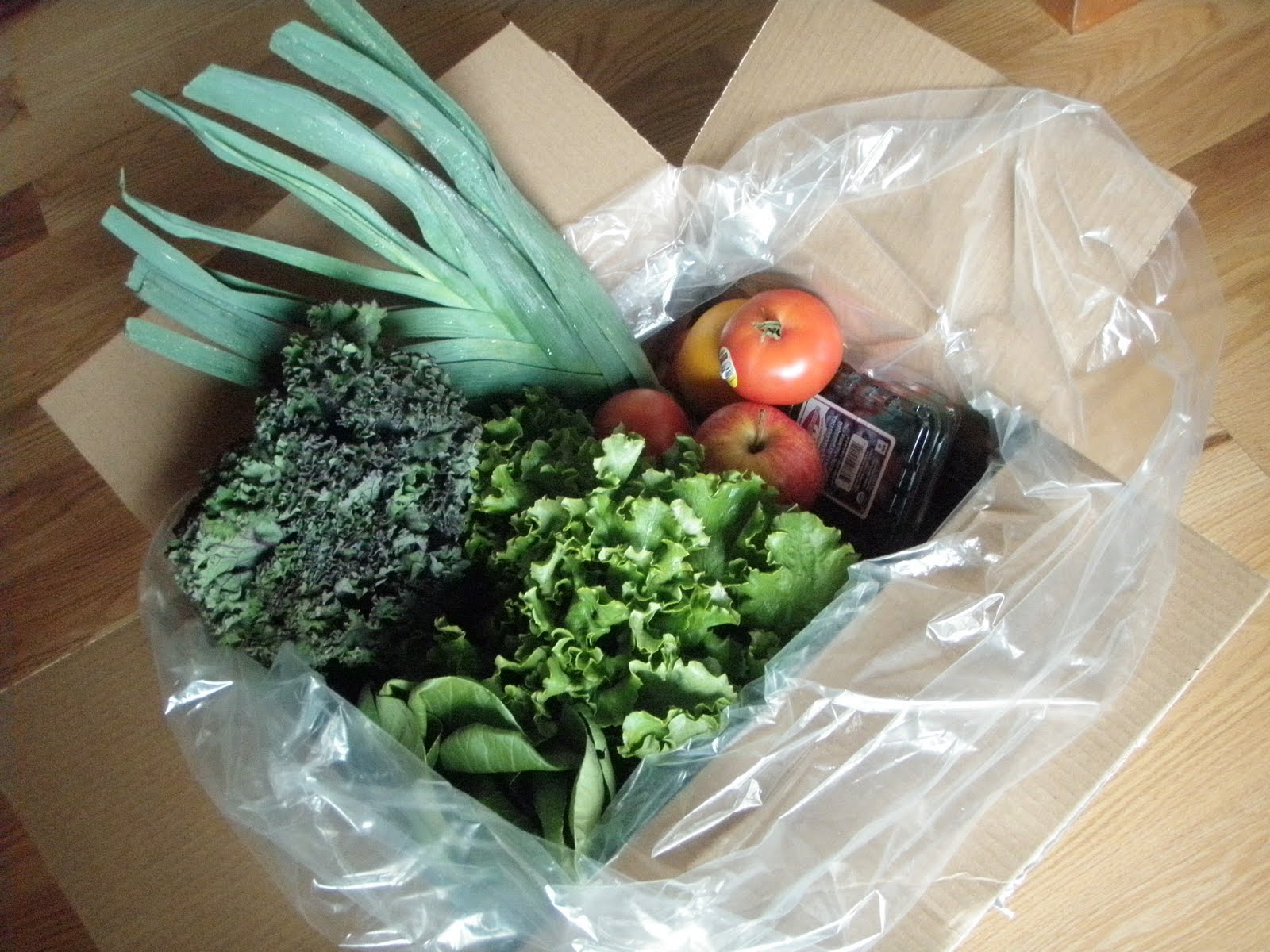
And here's another thing I'm excited about. I recently subscribed to Door-to-Door Organics and every Friday a box of fruit and vegetables is delivered to my door.


I'm sure it's a bit more expensive than buying the same produce at the supermarket, but it's forcing us to eat a healthier and more varied diet. Last week we got kale, bok choy, lettuce, leeks, tomatoes, green pepper, apples, peaches, blueberries, and oranges. The bok choy threw me for a bit of a loop but I looked up recipes on the web and ended up putting it in a stir-fry with garlic and ginger. Yum. We've been having some pretty amazing salads, too.